What can the largest IPO in history to date teach everyday investors about building long-term wealth?
The recent public offering of SpaceX captured headlines around the world, generating excitement, speculation, and a healthy dose of fear of missing out. While rockets, space exploration, and ambitious visions for the future make for fascinating conversation, the real lessons for investors go far beyond the company itself.
In this episode of Retire in Texas, Darryl Lyons examines the historic SpaceX IPO through the lens of investor behavior, market psychology, and long-term financial planning. He explores why liquidity events matter, how emotions like FOMO and euphoria can influence decision making, and what investors should consider before chasing the latest market trend. Darryl also discusses the role of diversification, the mechanics of index investing, and why maintaining a disciplined investment strategy remains critical even during moments of market excitement.
Whether you’re intrigued by the future of space exploration or simply wondering if you should invest in the next big opportunity, this episode offers practical insights that can help you make more informed financial decisions.
You’ll learn:
• What an IPO is and why liquidity events are important for investors and companies.
• How fear of missing out can lead to costly investment mistakes.
• Why euphoria and panic are closely related emotions in the investing world.
• How large public companies eventually become part of diversified portfolios and market indexes.
• The role capitalism plays in funding innovation and entrepreneurial vision.
• Key questions every investor should ask before purchasing an individual stock.
• Why diversification remains one of the most effective tools for managing risk.
If you’ve ever wondered whether you should chase the latest investment opportunity or stay focused on your long-term plan, this episode provides a valuable perspective on balancing excitement with discipline and keeping your financial goals front and center.
Benefiting from the show? We’d appreciate it if you left a review on your favorite podcast platform.
Transcript:
Okay, so I want to talk about SpaceX, which is absolutely astronomical. Haha. Yes, dad joke.
What I want to mention is, they did an initial public offering recently, so I want to talk a little bit about this. It was, frankly, the largest IPO in history. But I really want to talk about some elements of this that I think are relevant to you.
Do you want a wealthy retirement without worrying about money? Welcome to the Retire in Texas podcast, where you will discover how to enjoy your faith, your family, and your freedom in the state of Texas. And now here’s your host, financial advisor, author, and all around good Texan, Darrell
Hey, this is Darryl Lyons, CEO and co-founder of Pax Financial Group. And you’re listening to Retire in Texas. This information is general nature only. It’s not intended to provide specific investment, tax, or legal advice. Visit Pax Financial Group for more information.
Okay, so I want to talk about SpaceX, which is absolutely astronomical.
Haha, Yes, dad joke. Okay. No, for real. It’s now, like, the seventh-largest public company in the world. Just like that. Talking about a vision of, for those that don’t know, it’s a company that has a vision to colonize space, to colonize Mars. The one thing that I and other, you know, other things don’t don’t get me wrong.
And I’ll talk about those other things very, very important. But what I want to mention is many of you guys know, but you haven’t maybe thought about it because you’ve been busy. They did an initial public offering recently that was really about as hyped as an initial public offering can possibly be. Now, an initial public offering is when a company transitions from being privately held to being publicly traded.
So I want to talk a little bit about this. It was, frankly, the largest IPO in history. And I want I do want to talk a little bit about rockets, for sure, but I really want to talk about some elements of this that I think are relevant to you.
So, you know, we can certainly talk about them, just the entertaining jets and that kind of stuff.
But what does that mean to you today? And I have six observations here. Make sure I have six. I’ve changed. You know I changed them. Yeah I have six. I had seven. And then I realized that the two kinds were the same. So I consolidated them. But I have six observations on this space X company stock and IPO that I want to share with you that I think will be helpful.
First of all, this first observation that’s important for you to understand is that when an IPO occurs, it’s a liquidity event. And what happens is prior to the IPO, a company is private, it’s privately held. And I’m speaking the obvious to many of you guys. But hang with me because I’ll give you. I’ll give you some substance for those people who know this pretty well, but a privately held company, oftentimes you own a stock, but you don’t have the luxury of being able to sell it whenever you want.
Nor do you often get profits. Like maybe if you own real estate and you have trouble selling it, at least you get rental income. So you can just kind of hang tight until there’s a better time until a buyer comes along. But a mini privately held company, especially something like space, it’s just not profitable. And have and will continue to have erratic cash flows because they continue to invest in growth.
The idea of holding on to your money for an extended amount of time can eventually get kind of taxing. And you, you start to realize that your wealth is being created on paper and on one side of your balance sheet, you have this wealth being created. And then on the other side, because of inflation, you’re, your credit cards might be going up and balance or your mortgage, you know, you bought a big house.
And so eventually there’s a tipping point where, you know, a lot of the investors in a private investment say, I want liquidity, I want money, I want cash. And so this was a liquidity event for a lot of those people. It was framed. And I would say that it definitely has merit. I just don’t. I guess the skepticism in me recognizes that it’s both a liquidity event to provide liquidity to those privately held investors that have been waiting for so long.
But it’s also and this is how it’s often framed, and I think it has merit, like I said, as the money that the company wanted or needed for its ambitious growth plans and putting data centers in outer space takes money. And so they needed the capital to be able to do that. So I don’t want it to get lost.
The purpose of a liquidity event in an IPO is to release that money to private investors and to provide capital for growth. The second observation is FOMO. The fear of missing out is very real. And you and I, neither one of us are immune. When we get these FOMO spikes in our, It’s like a blood sugar spike.
We’ve got to recognize that that is what it is. You know, this has received a lot of headline attention. There’s so many shares that were traded initially that it seems almost, almost like everyone’s owned it but me. I talked to one guy, a very, very wealthy man. And, like, he didn’t get I think he might have got a couple shares after trying and trying and trying, but it feels like.
So there were some lockup periods and there was the inability for everyone to get access. So if you didn’t get it. It’s okay. Not a lot of people did get it, but this idea is that a lot of us are looking and seeing all these shares traded. It’s just a number, but there’s 555 or 517 million shares traded just on the first day.
So it feels like because of all the trading that there’s everyone but you that own it and me that own it. But the reality is, these are trading hands. A lot of people are buying and selling the same day, so it could be the same share trading many times the same day. So I just don’t want you to jump into this FOMO emotion because again, emotions and money don’t mix.
It’s like orange juice and toothpaste. So I really want to make sure that you don’t. If you don’t at least recognize what FOMO is. It’s an emotion. And much of these trades that are taking place, if you see the volume of trades and the activity, it’s like musical chairs with Elon Musk’s face on it. I mean, it’s money, you know, just the same people trading over and over again in many cases.
But don’t feel bad. A lot of people don’t own it. Most people don’t own it yet. And I’ll get to that. My third observation, I think, is similar to the FOMO. And this is just the reality of euphoria on one hand and panic on the other. They’re not necessarily opposites, but they are cousins of each other.
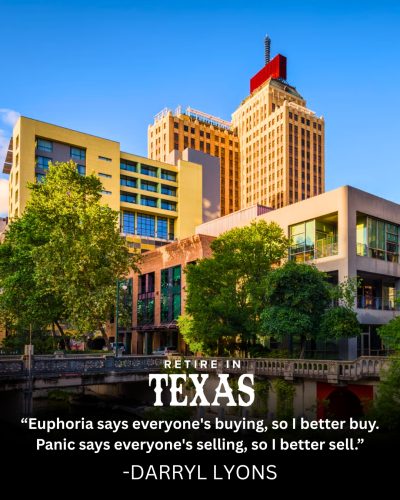
Euphoria is again, everyone’s buying it, so I better buy it. That’s the FOMO. Panic says everyone’s selling, so I better sell it too. So they’re both very emotional decisions. And I always try to spend a lot of time thinking deeply at Pax. I was talking to an advisor the other day, and I said, I really want to spend time thinking about how we can be ready for the next storm.
And I’m not anticipating any storm, but that’s just the cycle of life. And so these emotional decisions are really where it breaks us as people when we make really bad decisions. Some people might have gotten overzealous with the IPO and bought, first of all, I know people got overzealous and bought. And then just shortly after the IPO, SpaceX announced that they were going to buy an AI company called Cursor.
And it didn’t take long after that announcement for the space stocks to immediately drop. And so it’s just this euphoria can be so damaging. There’s some research and I’ll put this research report in the show notes. But a guy did excuse me a lot.
Research report on IPO, sizable IPOs, big ones. And he not only said, okay, I want them. I’m going to do some research on the big ones and the expensive ones. So that was the category. And he defined that in the research report. And you look at that. And he noticed that most of them had underperformed the overall stock market.
Those who I would say were diversified over the following three years, if somebody were to buy the IPO after the first closing price. So if somebody just bought it right away because they were excited three years later, they generally would have been better off just leaving their money alone in the stock market, just kind of diversified. And that was pretty extensive research.
And I think the main point in that research is that, you know, I think I’ve historically been through a few of the IPO IPOs, none of this big. This is the biggest one of all time. And it’s different. It’s always different, right. That in fact they say the biggest and you’ve heard this before the the worst thing to say every time in investments is this time it’s different.
And so this research person would say, well, I know space is completely different, but based on research historically, it’d be better off just not buying it right away and just kind of waiting for things to settle. And so we saw this euphoria initially. We saw a pullback. Who knows where it’s going to go. But just recognize that panic and euphoria.
There are cousins and both do a lot of damage to your long term wealth. Observation number four is that most of us will eventually own it in some capacity. And it may take several months. So what I mean by that is that many of us have diversified portfolios, and diversified portfolios means that it is spread around in a mutual fund.
A lot of us know it’s mutual funds, but now it’s exchange traded funds, which are indexes. And some of that can be confusing. Maybe you can unpack that with your advisor a little bit. What’s the difference between a mutual fund ETF and an index? I think I’ve done a few podcasts on that, but you’ll own it in an index with it’ll get that stock.
The space stocks will eventually get in your portfolio through an index. It’s kind of funny because the indexes have specific rules for being admitted into the index, and they’ve kind of bent those rules knowing the size and scope of space. But it’s you know, it usually takes some time like maybe a year for the S&P 500.
But P is changing the rules. So it’ll probably get in there sooner. But the biggest concern I had before I was able to, you know, just kind of recognize the, you know, how this thing works. I don’t think about IPOs a lot. But my biggest concern initially, because I wasn’t thinking about this and it makes sense.
Was that, oh, you know, the biggest company in the world is going to be an index. And then it’s going to kind of overweight the index because then everyone’s going to have too much space and too much Nvidia. And it’s nearly it’s going to because indices are often built this kind of nerdy. Many of them, specifically the S&P 500 are built so that if you buy one, most of your money goes into the biggest companies.
That’s called a cap weighted index. They have an equal weighted index which solves that problem. But in other words, in other words, I was concerned that once the S&P once the space X went into an index, it was going to create too much space in your portfolio. But I forgot that not all of space is publicly traded.
Much of it is still held privately. And so that’s called the float if you want to look that up. So the float that’s being floated in the public market is not as large as the company itself. Does that make sense? And so it’ll get into the index. And then as these private investors start to sell over time and the public the number of shares that are traded publicly, it’ll start to become a bigger part of your portfolio and us as advisors.
You know, we’ll be watching how much it becomes a part of your index, but initially, it won’t be as much as I originally thought because I forgot about that float piece. That was nerdy. Sorry to go nerdy with you, but hope you hope, hope that helped at least kind of think about it. And then maybe you can, you know, ChatGPT some of the terminology I threw your way.
Okay. Observation number five, this is probably one of my favorite observations, is just this economic engine of capitalism is alive. It’s healthy. I think this is just studying this. I’ve studied finance deeply. I wish I could remember everything, but I’ve studied it deeply since 1995, maybe 96. And it’s taken me a long journey to go from skepticism to an appreciation of this system of capitalism and all its flaws and warts, and how sophisticated it is and how it’s.
And to see it thriving in this, in this, through this space IPO is for me. I want to take a step back and go, wow, this is working where some person, some guy named Elon Musk had a vision. And private investors, private investors risked their capital. And then there was an event where they transitioned from the private markets to public markets and were rewarded for their risk.
And now there’s a new group of investors that will participate in the future, the next stage of their growth. And I just think that when you see the market behave, where people are starting to recognize this is an opportunity to invest in the future. I think that’s a very, very healthy system and one that, you know, we didn’t have when people took the risk of coming to the United States and founding America.
And, you know, the exploration of, of, of, of our country. I was thinking at the same time about, you know, spice trades and the risks that took place as people were trading things in the source spot in our history as slaves as well. But there were a lot of risks that took place. And I think about the 1600s and 1700s and the, you know, if you I’m, I don’t want to digress too much, but let me I want to I want to mention this.
If you invested in some excursion that you had belief that maybe you could get the spices that would and you’d get a return on your investment from these, you know, these trades in India or whatever. And the ship sank. You were toast. And so there weren’t all these systems in place. In fact, you didn’t even know if you could trust the guy or you were getting a fair deal, and there were just no systems in place to risk capital.
And today, to see where we’ve come from and where we’re at now, where again, there’s warts. But it’s just crazy how a person can have a vision and establish a great company and use the private markets to encourage people to invest and then transition into the next iteration of that vision and have a new group of investors to participate in that vision.
I think it’s a fascinating thing, and I feel very fortunate to be a part of it. Okay. The last observation I want to make is that we as investors still need to ask ourselves three questions. Is this a good business? Which man, this is a crazy cool business. Now, I’m not endorsing the business as an investment because your situation is different from somebody else’s.
But we’re talking about like rockets and spacecraft and launch systems and multiple life and, you know, all the ancillary things that’s going to come, you know, whether it’s heat shields or, you know, new GPS devices, maybe even ride shares to space. And if you haven’t yet, which I’ve done and it’s really cool, drive down Brownsville or that community that’s next to Brownsville.
I forgot the name and the Rio Grande Valley and went to look at space. It’s fascinating. It’s awesome. It is so cool to see this stuff. And so is it a good business? I don’t know, but it’s really awesome to see and digest and research this. So I just want to say that you have to ask yourself, are you buying a good business?
The second thing is what’s the risk? And there’s real risk here. I mean, there was a Somali TikToker that said, I wouldn’t worry too much about him. He’s about to die, meaning that there are assassination attempts against Elon Musk right now. One was 20 minutes from the Gigafactory in Austin. So what happens if he dies? So there’s real risk with this.
So don’t be Pollyanna that the reward is all upside because the risk is just, just as much. But that leads me to the third question. If you buy it, then just make sure it’s an allocation in your portfolio that’s reasonable that if it doesn’t work out you’re okay. So you may kick yourself down the road and say I should have bought more, but just know going in that the most prudent approach with these types of investments is to make sure that you’re not over allocated.
Only your financial advisor can help you with that. So again, I wish I had a crystal ball to tell you what the future of space would look like from a stock or a portfolio investment return. But I do still have conviction that approaching an individual stock through a diversified portfolio will serve you well. It will also relieve you of that blank space in your head of worrying about a stock that you might have over invested in, which happens all the time.
And you can use that space in your head to not worry about space and focus on your family. And that just makes for a better life. So thank you again for listening to these observations on space. And as always, you think differently when you think long term. Have a great day.
This content is for informational and educational purposes only and should not be construed as investment, tax, or legal advice. All investments involve risk, including the potential loss of principal. Past performance or historical trends are not indicative of future results. Please consult your financial advisor before making any investment decisions.
Resources:
The SpaceX IPO: How Index Funds Are Adapting | Morningstar
This content is for informational and educational purposes only and should not be construed as investment, tax, or legal advice. All investments involve risk, including the potential loss of principal. Past performance or historical trends are not indicative of future results. Please consult your financial advisor before making any investment decisions.
Listen on: