Is food insecurity really a problem in San Antonio – even in a city with so much abundance?
Many people assume hunger is caused by a lack of food. But what if the real issue isn’t supply – its distribution, dignity, and breaking the deeper psychological cycles of poverty?
In this episode of Retire in Texas, Darryl Lyons sits down with Marcus Walker of Daily Bread Ministries, a San Antonio-based nonprofit celebrating 30 years of serving the community. Marcus explains how Daily Bread uses food as a tool – not just to meet immediate needs, but to equip churches to provide poverty alleviation training, parenting education, financial literacy, and long-term transformation.
Rather than operating traditional handouts alone, Daily Bread trains churches to serve families in ways that restore dignity, build capability, and help break generational cycles. From client-choice food pantries to parenting classes like Raising Highly Capable Kids, this conversation highlights how meeting physical needs can open the door to lasting hope and restoration.
You’ll learn:
-
Why food insecurity is often about access – not shortage.
-
How churches play a key role in breaking cycles of generational poverty.
-
The psychological impact of poverty and why dignity matters in food distribution.
-
How parenting and financial education can create long-term change.
-
How every dollar donated can generate a significant community impact.
Daily Bread Ministries operates without government funding to preserve its mission and faith-based foundation. Through local partnerships and volunteer support, they distribute over $11 million worth of food annually across San Antonio and surrounding areas.
If you’d like to support Daily Bread Ministries, you can:
-
Volunteer by emailing Volunteer@DBMSA.org
-
Schedule a tour or give online at DBMSA.org
This episode is a reminder that transformation often begins with meeting basic needs – and that sustainable change requires community, education, and faith working together.
Benefiting from the show? We’d appreciate it if you left a review on your favorite podcast platform.
Transcript:
Darryl: Hey, this is Darryl Lyons, CEO and Co-Founder of PAX Financial Group, and you’re listening to Retire in Texas. This information is general in nature only. It’s not intended to provide specific investment, tax, or legal advice. Visit PAXFinancialGroup.com for more information. Look, I’m having a guest today and I don’t do this a lot, but I’m really excited because it’s a 30-year deal for you guys, right, Marcus?
Marcus: It is, yeah.
Darryl: I’ve got Marcus Walker here, and they’re celebrating 30 years of doing some really cool stuff in the community. And so, I thought I got to share this message with you all. Because 30 years is a long runway, and there’s been a lot of, man, there’s been a lot of change over the 30 years. I would imagine.
And then there’s a lot of vision about what the future looks like. So, I got Marcus Walker here. Marcus, tell us where you work at. What do you do? And then I’m going, I’ve got some questions for you.
Marcus: Yeah, I have, it’s great being here. Thanks for having me.
Darryl: Yeah, it’s super exciting.
Marcus: I had the privilege of stewarding Daily Bread Ministries. I’ve been there for 15 years.
Darryl: I didn’t know it was that long.
Marcus: Yeah, it actually 15 years this week.
Darryl: Congratulations.
Marcus: Yeah. Thanks. And so, and, you know, just to kind of give a high-level overview of just what we do, we use food as a tool. And what I mean by that is, is we work with churches and ministries all throughout San Antonio and now Houston and Corpus Christi. And we provide them with food so they can run food pantries. But the ultimate goal for us is poverty alleviation training.
Darryl: The training part of it.
Marcus: The training part.
Darryl: And that’s yeah. Before you get in, I don’t mean to cut you off, but Daily Bread, I want to make sure that because Daily Bread, there’s a lot of Daily Breads. Is there a lot of Daily Breads?
Marcus: There is. So, there’s only one Daily Bread like us. You’re hitting on an issue that’s out there for sure. You know, we regularly, we’re not the bakery.
Darryl: Okay, let’s check that box.
Marcus: We’re also not the devotional. You know, a lot of people get confused and they say, you know, they call us and they say, I haven’t got my devotional. And it’s like, well. Yeah. So that’s our Daily Bread.. And so, and then, of course, our friends out at Hill Country Daily Bread in Boerne, that’s also another, you know, and they started with us, and then went out and planted in Boerne. And so, we’re friends, we share product from time to time, but we’re not the same organization.
Darryl: And so y’all’s specific location is where?
Marcus: Off of, well, I was going to say AT&T, but it’s not AT&T anymore. It’s Frost. The Frost Bank Center, out by the Frost Bank Center.
Darryl: Yeah, is it, because I haven’t been there.
Marcus: We’re going to get you down.
Darryl: I know you got to get me down. And there’s been events I’ve been invited to. I just haven’t been there. But tell us specifically where it’s located relative to Frost Bank Center.
Marcus: So, you know, as you exit off 35, you’re first left onto Belgium Lane. And we’re down about a mile on Belgium Lane.
Darryl: Okay. And so for those that aren’t in San Antonio, please continue to listen because I want you to hear this story. But those that are in San Antonio, I want you to know the location. And it’s near the Spurs. If you go watch the Spurs.
Marcus: Go watch the Spurs. If you can make it to his first game, you can easily get to us. Yeah.
Darryl: Cool. So, 15 years and so you use. So, I think about like, I had that ministry in Eastern Europe where we use basketball. To be able to, you know, that’s the tool that we use to share the gospel, and you know, provide leadership and, you know, provide hope. And you use food.
Marcus: We do. Yeah. It’s, I mean, I don’t know a better tool. You know, everybody needs it.
Darryl: Yeah, you kind of need it.
Marcus: So yeah. So, if you want to reach folks that are struggling in poverty, food is a great tool to do that. Yeah.
Darryl: I want to go back a little bit. How did you even get connected with Daily Bread?
Marcus: I, so my wife and I were missionaries with an organization called youth with the mission. And we met in that, we were in Germany. I was, we were serving in Germany, overseas, doing work in Africa and just all kinds of all kinds of cool stuff. And the Lord called us back here.
And, so I was, I was honestly, I was looking for what, you know, Lord, what did you call us here for? And through just a series of different relationships. And I just believe that that’s the way the Lord orchestrated it.
You know, I met Seth Kuehn, our founder and, you know, I was down volunteering, just trying to do something constructive with my time while I was looking for a job. And Seth called me upstairs and offered me a job, and so, that was 15 years ago.
Darryl: So, did you realize that there is a, like, a need like this? So let me kind of frame, let me ask this way. We think about the prevalence of stuff and resources in the city and in America today. But people really go hungry. Is this a thing?
Marcus: It is a thing. It’s really interesting because I don’t think that we, I definitely didn’t know it before I, before I went to work at Daily Bread. So, if somebody sitting out there listening and saying, I didn’t know that that’s not uncommon, you know, but yeah, there are, food insecurity is a real thing.
You know, it’s not, you know, and a lot of people think it’s a thing because there’s not enough food that I think really the issue is, is there’s not a way to get to the excess food in America, to the people that need it. That’s the, so the mechanism is missing. You know, there’s plenty of food, I think, that exists in our society.
It’s just a matter of how do we get it. And so, I think in a lot of ways we’re solving some of that, you know, that problem because, a church is a great way to do that.
Darryl: Wow. So, there’s so much I want to ask you, but I always give, I always give whenever I have a guest, I give questions that I have, and then I find myself deviating from them. But this idea of people going hungry, I can relate. And, personally, I’ve never gone hungry, but, you know, there’s been tough times in my family history, and my mom specifically tells me stories of her challenges growing up and, it’s hard to believe that exists today.
And it kind of breaks my heart to think that people are struggling there and so do they just, like, knock on your door or do you find that do you go out and find these people or how does this work, word of mouth?
Marcus: So, you know, just for clarity, we work with churches and Christian nonprofits, that, that, yeah, for the most part, have heard about us over 30 years and they come and they pick up food from us and they take it back out and run food pantries. We often say it would be a nightmare for us to try to serve the end user of this, of this product. I mean, we probably have a line around the block.
All we’d be doing is passing out food and we just don’t believe that would be a good model. And so, through serving churches, by equipping churches to serve their community, there’s a whole lot of really cool things that get to happen that way.
Darryl: So big churches and small churches, like, is it across the board?
Marcus: Yeah. We don’t, I mean for us, we don’t really care about the size. What, what it tends to be is a lot of smaller churches. Because those are what you find in the communities where food is a need.
Darryl: That’s right.
Marcus: You know, a lot of our bigger churches are out in communities where the need is it, the need is there. It’s not like it’s not. But, a lot of the, a lot of the need is found, you know, if you’re, if you’re in San Antonio and you know, San Antonio, you know, kind of inside loop 410 and then some, some pockets out in, you know, in some of the smaller towns around, around the city.
Darryl: And that’s, you know, that’s such an interesting dynamic. And I, you know, I think about the, you know, the federal government and the state playing a role. And I understand they have to play a role to a certain degree. But really, when it comes down to it, the churches really, boots on the ground, understanding the families and sitting down with them kneecap to kneecap and then connecting the dots.
That’s what really works. And that’s the body of Christ. And so, I’m glad that you’re playing a resource there. There’s a, there’s a story in your website about a lady named Robin. Yeah. Can you share a little bit about that story? Because I thought that was interesting. And I like the stories on the website, that helps me.
Marcus: Oh, well, good. I’m always glad that, you know, to even hear somebody is looking at the website. It’s always a pleasure. But yeah. So, yeah, Robin’s story was really interesting. So, you know, we kind of hadn’t talked about it, but really at the heart of what we’re doing, we’re giving food to churches so that they can run food pantries, but we’re training them to train the people that they meet.
Darryl: Okay. That’s clarity. That’s clarity for me before you go into Robin. Thank you for that. So, you’re training the churches right okay.
Marcus: Because how to interact with so we as North Americans, we have our idea when we hear the word poverty we typically think lack. That’s just kind of how we’ve been programed.
Darryl: That’s good. Okay.
Marcus: The interesting thing about people that are struggling in poverty, they describe it a little bit more psychologically. They say things like, I don’t feel like I can overcome. I don’t think like things will ever change. You know, they describe it in different ways. And then maybe we do. And so, so what we’ve learned and this is this has been, it’s been a process of what we’re learning is, is that we’ve got to address some of these psychological things that are going on in people’s lives because we can give them food all day long, and it’s not changing anything. And so, so that’s where the classes come into play. And so.
Darryl: And so when you, who’s sitting in the classes, the church leaders?
Marcus: Church leaders are sitting in classes. So, it’s a trainer model. So it’s,
Darryl: I see okay.
Marcus: We train them so that as they as they interact with people, they know that we’re showing them new ways to interact. You know, probably the simplest way to explain that is this is like one of the things that we’re big advocates for what’s called a client choice food pantry, as opposed to the drive thrus that are so popular.
And I’m not, you know, don’t hear me ragging on drive thrus because it’s like there’s a purpose. Yeah, right. But there’s a there’s a much, there’s something different happens when you set out tables and you put out food and you allow the person that’s hungry to go through and kind of.
Darryl: Because there’s dignity in that.
Marcus: Dignity. Exactly. Nailing it. Yeah, that’s the point. And so, it automatically creates a different type of environment. And kind of helps conquer some of those feelings. I mean I just if you just step back for a second and imagine what it would feel like to have to walk into a food pantry.
Darryl: Yeah, yeah.
Marcus: You know, so it’s like we need to think about those kind of things if we’re going to change something.
Darryl: Oh, and when you talk about those deep psychological things, these are these are stuff that’s rooted in and even a next layer of abuse or, I mean, even I think about we’re talking a little bit about this, like the importance we’re talking about, like managing energy, managing stress. And, you know, just as you walked in here and I think about, you know, I think about how do I manage my energy and how to. And so, if you don’t have food, like, sometimes you can’t even think like or and I mean cognitively it’s just a challenge, you know, not only the psychological issues or, you know, I mean, I can’t imagine.
So, your cloudy mind going in there. And so, training the trainer is, is a model that’s been in place for how long now?
Marcus: So, you know, it’s something that we’ve been we’ve been we were playing we started playing with it probably about seven years ago. Yeah. And, I feel like we’ve really gotten our feet.
Darryl: You dialed that in?
Marcus: Yeah. Like, we’ve really dialed it in, and it’s. It’s a lot of fun right now. And so, you know, that that model, I would say, has really been up and running at a really good clip the last couple of years.
Darryl: And so Robin, as an example, is a somebody that.
Marcus: Robin came through a class. Robin was not a, not a pastor. Robin was somebody that came through a class at, at a church that we support and their pastor went through the training and was running a class. And so, she came through it was a raising highly capable kids. That was the class.
Darryl: Okay. Yeah, yeah, yeah.
Marcus: Which focus on the family wrote that curriculum. It’s pretty simple. It’s the 40 developmental assets that every child needs to have. Wow. It says the more those assets they have, the more likely they are to overcome. You know, the poverty in the situations that are in. So, Robin came through that class. It was a 12-week class.
And, you know, probably just the coolest thing is she, you know, she was she came out of a, you know, a divorce situation. She’s now a single mom with three kids, trying to figure it out. I’m a product of a single mom with three kids. And so, I, you know, I could really just identify she’s just trying to figure out how do I make this happen. And she found herself at a food pantry, you know, because she just, you know, she was. It’s not that she didn’t have a job.
She just couldn’t make ends meet, you know? It’s like, she’s a very common situation in San Antonio to find people. It’s not that they don’t have jobs. And it’s not that they’re not willing to work. They’re just living in this world where, okay, do I pay my light bill or do I buy food?
Darryl: Yeah. No kidding.
Marcus: And so that was Robin. And, and just to see her come through that, and to that, that you can go on the website and you can see the picture of the kids just they were so proud of their mom.
Darryl: That’s that gives me goosebumps on my goosebumps.
Marcus: Yeah. Because it, you know, just that whole thing and what that did for her parenting. And she’s since gone through finance classes and I mean, it’s just she’s a great success story.
Darryl: She’s a rock star.
Marcus: Yeah. She is she’s really cool.
Darryl: She’s an advocate.
Marcus: Yeah. So, it’s really, really, really positive.
Darryl: Any other. And I don’t mean to put you on the spot. Any other stories about some people that might have gone through?
Marcus: Yeah, I was, I was just sharing a story with some board members the other day because it’s, you know, it’s just it’s just one of those stories, and I’ll tell it as fast as I can here, but. We had a, it was another raising highly capable kids class. And in that particular class, there was a man and a woman that were divorced. They themselves were married at one point, and they got divorced, but they were both in this class, which is really unusual.
Darryl: Wait, they were married to each other? Okay. Just making sure.
Marcus: Yeah, yeah. Thanks for clarifying. But yeah. So, they had been married. They got divorced. And they were going through the class together. And, and so we get to the end, there’s always a big graduation caps and gowns, the whole thing. You know, we want to celebrate you. You accomplished something, you finished something. That’s a big deal.
And so, there’s always a time for them if you want to stand up and share a testimony. What did you learn to do in your life? He stood up. The man stood up, and he said, you know, what I learned in this class was, is that when we were married, I was trying to raise our kids the way I was raised, and my wife was trying to raise them the way she was raised.
And we never had conversations with each other about how do we want to raise our kids. And that created so much tension in our marriage. And he said the really cool thing that God has done is, is when we realize that we are now having conversations and we have dreams for our children.
Darryl: Oh wow.
Marcus: And you’re just, you’re sitting back and it’s like, man, there’s a, there’s not a dry eye in the room.
Marcus: You know, and it’s like, I don’t know if that couple will ever get back together. But what I do know is, is that they are on the same page with how they want to raise the kids. And so that’s going to start to break the cycle.
Darryl: There’s some restoration there too.
Marcus: And so just it yeah.
Darryl: And breaking the cycle is probably something that comes to mind when y’all do your deal. I’m sure when you go out there and work, I would imagine just like every job, you kind of get in the grind and do what you got to do. But breaking the cycle is important. I think about even the Old Testament and how God really pursues and loves generations. And so, to see that that’s happening there.
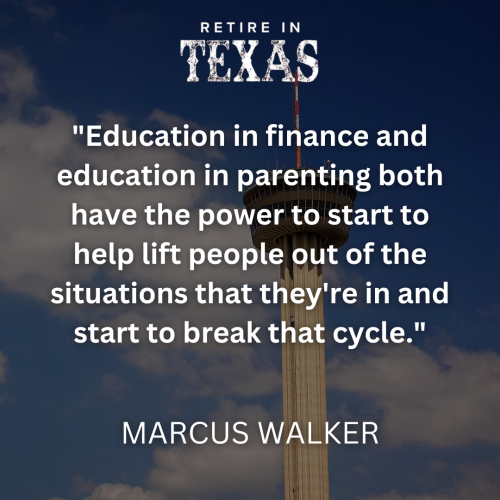
Marcus: At the end of the day, that’s really what we’re after is how do we break this cycle. Yeah. You know, and we do believe education plays a huge role in that. Of course, healing and counseling and all those other things probably all play a role in breaking that cycle. But education in finance, education in parenting both have the power to start to help lift people out of the situations that they’re in and start to break that cycle.
Darryl: People are probably wanting to know where you get the food from.
Marcus: Yeah, all over the place. Yeah, so, you know, in 30 years, we’ve developed a lot of really good relationships here locally. You know, most people don’t know. I certainly didn’t know until I, until I came to Daily Bread. There’s a huge produce terminal over on the west side of town.
You probably didn’t know that either. And most of those, most of those businesses in there are supplying restaurants. You know, we just don’t think about it. You know, it’s just where it comes from.. And so, there’s a lot of excess. There’s just that’s just life. There’s we have tons of excess in the country.
It’s amazing how much food is out there. And so, produce is a focus for us. Because if you think about food insecurity, if you think about, you know, not having enough money to buy food, most of the time when people, whatever money they do have, they’re spending on canned goods and things like that because they can stretch that dollar further.
Yeah. And so, so in that case, you know, a lot of times they’re not buying fresh produce, which is really the stuff you probably should be, right, as opposed to the canned stuff, you know, and so there is a focus for us on that. You know, we work with the school district here that we pick up a lot of extra milk and juice.
Darryl: Oh, yeah. Just extra?
Marcus: Yeah. Yep. It’s all excess, you know, and so it’s just a matter of building those relationships, picking that food up. So, a lot of it comes locally. And then we have some, you know, some partners that, you know, we’ll send trucks to Dallas and Houston and stuff like that from some larger, you know, larger organizations.
Darryl: And so how many employees?
Marcus: Nine.
Darryl: And volunteers, I was going to say.
Marcus: Yeah, a lot. It’s like I probably don’t even know that number on the top of my head, but yeah, it’s a lot of volunteer power. I mean, we’ll send out about $11 million worth of food. I know the website still says 10, but. Yeah. Last year, last year it was $11,600,000 worth of food.
Darryl: That’s insane.
Marcus: That went through a warehouse. And I have three warehouse employees. So, yeah, they’re.
Darryl: They’re hustling.
Marcus: Yeah. They’re hustling, they’re working, and.
Darryl: I can’t imagine. So efficiency is obviously.
Marcus: Efficiency is a big deal. And volunteer power is definitely a big part of that, too.
Darryl: I can’t believe we need to land the plane here. I just have a couple more things.
Marcus: Yeah. It’s okay.
Darryl: So obviously, you know, from where I sit, you know, when people’s lives are transformed from living out of a place of hopelessness. And in Christ, that’s really the epitome of transformation. And so, 2900 people made decisions for Christ.
Marcus: Yeah, yeah. So our, all of our, all of our church partners report back to us how many people they’re serving. You know, we and one of our key metrics is salvations. Because at the end of the day, we can do a lot of stuff that’s really good stuff. But lasting transformation, we believe, only takes place within a relationship with Christ.
Darryl: So that’s a collision of a couple things happening. So certainly, feeding people like meeting them where they’re at, giving them food, sustenance, and then, ultimately walking them through a process to transformation, hope and healing. Right.
Marcus: Yeah, absolutely.
Darryl: I yeah, there’s just so much to ask. But let me, let me go and land the plane because, I try to keep the podcast succinct. I really want to know how people can support you. A lot of people that are listening, you know, many of them are in the greater San Antonio area. So, can they volunteer? And if so, what does that look like? Absolutely.
Marcus: Yeah. We, like I said, we love our volunteers. And so, yeah, it’s a pretty simple process, you know, shoot us an email, Volunteer@DBMSA.org. Okay. That’s the easiest way to plug in and find the different volunteer opportunities. And we’ll, you know, of course, we’ll get back to you until.
Darryl: Can you say one more time?
Marcus: Volunteer@DBMSA.org. So that’s Daily Bread Ministry San Antonio .org.
Darryl: Okay, cool.
Marcus: And yeah, we get groups that I mean, you guys have come out. You know and so, you know, businesses that come out, you know, small groups, churches, whatever, we love to have groups come out and volunteer.
Darryl: So volunteering and, you know, as I, we transition a lot of people into retirement, I do think it’s healthy for them, really anybody to volunteer. There’s a lot of research on that. But also, economically, you guys have needs just like every other nonprofit.
Marcus: We do, I will say so. So we made a, and this was even before my time, you know, our founder, just this, this foresight to say, we’re not going to ever take any government funding, because it would limit our ability to share the gospel.
Darryl: Yeah, that makes sense.
Marcus: So we didn’t want that to be the case. And so, so we talk to individuals, we give tours of our place, even if you can’t volunteer, if you want to come down and take a tour, I’d love to have you.
Darryl: I was going to, I was going to ask that.
Marcus: Yeah. We, you know, are happy to give you a tour and just kind of let you see what we do.
Darryl: Okay. I’ll do that. John, if I say that on the air, John will make me.
Marcus: He’ll make you come down. Yeah, yeah.
Darryl: I’ll find time to get down there.
Marcus: Yeah. But yeah, financially, you know, sowing into the work that’s being done there, you know, we’re saying, you know, every dollar that comes in, we can we can crank out a minimum of $10 worth of food.
Darryl: Wow.
Marcus: And the training, you know, so we run on a pretty lean budget.
Darryl: It’s a good return on investment.
Marcus: Pretty good return. Yeah. It’s like, that to be hard to find in in many other places. And so, you know and I’ll just say our, our greatest need because it’s the thing that fuels our growth is those folks that come alongside on a, on a monthly basis, you know, we love one-time gifts or we’re very grateful for sure. But, yeah, but those monthly, you know, this is a finance show.
Darryl: Yeah, for sure.
Marcus: Yeah. Everybody understands the idea of a budget. You can spend what you know you have coming in and so that’s the same for any nonprofit.
Darryl: It can be $25. It can be $250 or $2500.
Marcus: We’re doing a promotional thing this year because you mentioned that we’re in the 30th year. We set a goal to have 150 people sign up to do $30 a month, for our first year anniversary. So it can be, you know, it’s a pretty simple, simple thing, but that helps us just.
Darryl: Continue to feed, continue.
Marcus: To do what we’re doing. And it helps us plan for the growth.
Darryl: And they can go to the website.
Marcus: Website to do that.
Darryl: Tell us the website.
Marcus: Very simple DBMSA.org.
Darryl: DBMSA.org. Okay.
Marcus: You’ll see it right there. You can sign up for a tour. You can sign up to volunteer. All of it’s right there.
Darryl: What I find most effective. This is my experience when you’re giving and you’re engaging. Yeah. And that can be even you know, I do stuff with Compassion International and I can give them money each month and then step away. And it really doesn’t really matter. But when I’m writing to the kids and, and being engaged that, that it’s really effective.
So, so the collision course for you and this is teeing you up would be somebody who has a monthly gift but also, you know, integrates the volunteering into their rhythm of life.
Marcus: Yeah. Yeah. If that’s something that they’re able to do and that they would like to do, we would love to have them because that’s. Yeah. Yeah. That’s just.
Darryl: And y’all are good people too.
Marcus: Well thank you.
Darryl: Yeah I mean the board I know. But you know.
Marcus: We know a lot of the same folks. Yeah.
Darryl: Just good people. So, thank you for all that you’re doing and serving. I feel like I just really cheer you guys on, and, I’m happy to know y’all. And happy that y’all are serving our community and serving the communities that are really, you know, this is not an easy time economically for a lot of people.
We call this a k-shaped recovery, where a lot of people that are listening, they own investments, and they went up. And so the k, the upper part of the K that they their assets went up. But there’s a large group of the economy that’s that other leg on the K where it’s tough and health care is expensive.
And you know, people with what you would consider reasonable jobs are just trying to make ends meet. So, I appreciate what you’re doing across the board.
Marcus: Well, thank you. And you guys, just yeah, your support means a lot even just to get to be on here. Yeah. It’s fun. Thank you.
Darryl: Before I let you go. So, last question. Yeah. What is your favorite 90s alternative song?
Marcus: Oh, my goodness, 90s alternative song. Well, you put me on the spot.
Darryl: Yeah. Well, we talked beforehand.
Marcus: Yeah. You know, it’s funny because when I, you know. And I don’t even know if it’s my favorite, but it’s definitely just kind of jumps out there. The one I think of 90s alternative, I think of Nirvana, and I think of the classic, the Smells Like Teen Spirit.
Darryl: Yeah, yeah, that’s a classic. Right.
Marcus: And it’s. Yeah. And it’s like, yeah, it’s a classic now I guess.
Darryl: It’s a classic now, I know I hear it in Walgreens.
Marcus: Yeah, yeah. It’s so you know, and it’s like I’m probably going to go back and listen to the lyrics of that and say, oh, why did I say that.
Darryl: No, no, no judgment here, no judgment, this judgment free here. But now it’s just, I just, we were poking at each other beforehand, and it’s talking about, like, man, we listen to some stuff that we probably should have been listening to and now hearing in the lyrics like, oh, yeah, but thank you again for hanging out with me.
This is fun and I appreciate all that you do. And for those that are, tuning in or staying tuned to the very end, thank you very much. And as always, I want to remind you, think different when you think long term. Have a great day.
Listen on: